



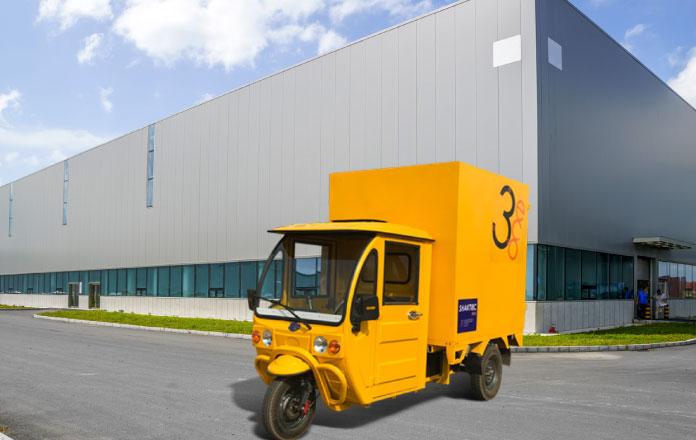
When people talk about India’s electric vehicle (EV) Market, the conversation usually drifts toward luxury cars and massive funding announcements. But if you spend any time on actual streets near a metro station, a wholesale market, or a crowded residential lane you start to notice a different story unfolding. It’s happening in the world of three-wheelers, the vehicles that help daily commuters, delivery riders and small business owners. Somewhere in the middle of that change sits a company called 3EV Industries, better known as 3evi.
Founded in 2019 and based in Bengaluru, 3evi didn’t enter the market trying to “disrupt” anything in a dramatic way. If anything, the company appears to have taken a more grounded view: electric mobility in India would only work if it made financial and practical sense for drivers who depend on their vehicles for a living. That meant focusing less on sleek looks or premium branding and more. It focuses on everyday concerns, like how often a vehicle breaks down and it costs to replace the battery, and whether a nearby mechanic can actually fix it.
From Conversion to Creation: How It Started
3evi’s early days were spent doing something fairly unglamorous but, in hindsight, probably useful. Instead of building brand-new electric vehicles right away, the team focused on converting existing petrol and CNG three-wheelers into electric ones. For many drivers, this was the only affordable way even to consider going electric.
That phase seems to have doubled as a learning ground. By working closely with drivers and fleet owners, the company learned small but important things. 3evi observes how much weight each vehicle carries in real conditions, tests how it performs in heat and heavy traffic. 3evi shifted from conversions to building its own purpose-designed electric three-wheelers manufacturer.
Vehicles Meant for Work, Not Showrooms
Today, 3evi’s lineup covers both passenger and cargo three-wheelers, aimed mostly at last-mile transport and small logistics operators. These are the kinds of vehicles you’d expect to see outside apartment, complexes, near local markets or making short delivery runs through crowded neighborhoods.
The company’s models fall under India’s L5 category, which essentially means they’re built for commercial use and higher loads. The design priorities reflect that. Instead of touchscreen dashboards or flashy lighting the focus leans toward battery efficiency, load-bearing capacity, and how easy it is to service the vehicle when something goes wrong.
One interesting aspect of 3evi’s approach is that it hasn’t completely abandoned its roots. Alongside selling new vehicles, it still supports conversions and refurbishments.
A Business Model That Tries to Fit the Street Economy
Where many EV startups rely almost entirely on selling vehicles upfront, 3evi appears to be spreading its bets. Vehicle sales are part of the picture, but services play a big role too. Its Battery-as-a-Service offering, for example, lowers the initial cost for drivers by separating the battery from the vehicle purchase. Drivers pay for usage, while the company earns recurring revenue.
Beyond that, the company provides charging support, maintenance and regular service to keep vehicles running smoothly. 3evi focuses on keeping costs low instead of pushing people to buy new vehicles. For many drivers in India, this steady and reliable approach is more helpful than any advertisement.
Funding, But With a Different Kind of Backer
3evi’s steady growth caught the attention of large investors. One key moment came when Mahanagar Gas Limited led a Series A funding round. Unlike regular investment firms, MGL has deep experience in energy services, which shows the partnership is about more than just funding.
The company used the funding to grow its factories, reach more markets, and improve its vehicles. Even though it is still a private company without a public market value, its deliveries and revenue have been rising.
Finding Its Place in a Crowded Market
India’s electric three-wheeler market is growing, well-funded brands are competing on one side. While small and new companies try different ideas on the other hand. 3evi sits in the middle, focusing on building practical vehicles that solve real problems for three-wheeler drivers.
3evi, focus on livelihood drivers, small fleet owners and last-mile operators gives it a different tone from companies chasing mass consumer recognition. That may limit its visibility in mainstream conversations, but it could also be what keeps it relevant on the ground.
The future of electric mobility in India probably won’t be shaped only by the big launch events of luxury EVs. It’s more likely to be built on daily routes, crowded streets and the steady math of earnings versus expenses. In that everyday reality, 3evi’s quiet, work-first approach might turn out to be its real advantage.