

By using this site, you agree to the Privacy Policy and Terms of Use.
Accept
planetstoryline.complanetstoryline.complanetstoryline.com
Notification Show More
Font ResizerAa
  • Home
  • Industry
    • Agri Tech
    • BFSI
    • Clean Tech
    • Ecommerce
    • Edtech
    • Health Tech
    • Logistics
    • Retail/D2C
    • Travel Tech
  • Innovation
    • AR/VR
    • Artificial Intelligence
    • Blockchain
    • Cloud
    • Cybersecurity
    • Internet of Things
  • C-Suite
  • Magazine
  • Press Release
Reading: Impact of Cybersecurity in the Remote Learning Setup
Share
planetstoryline.complanetstoryline.com
Font ResizerAa
  • Beauty
  • Model
  • Lifestyle
Search
  • Home
    • Home 1
  • Categories
    • Beauty
    • Photography
    • Lifestyle
  • Bookmarks
  • More Foxiz
    • Sitemap
Have an existing account? Sign In
Follow US
  • Advertise
  • About Us
  • Contact
© 2022 Foxiz News Network. Ruby Design Company. All Rights Reserved.
planetstoryline.com > Innovation > Cybersecurity > Impact of Cybersecurity in the Remote Learning Setup
CybersecurityInnovation

Impact of Cybersecurity in the Remote Learning Setup

Planet Storyline
Last updated: 2026/01/11 at 5:15 PM
By Planet Storyline 5 years ago
Share
3 Min Read
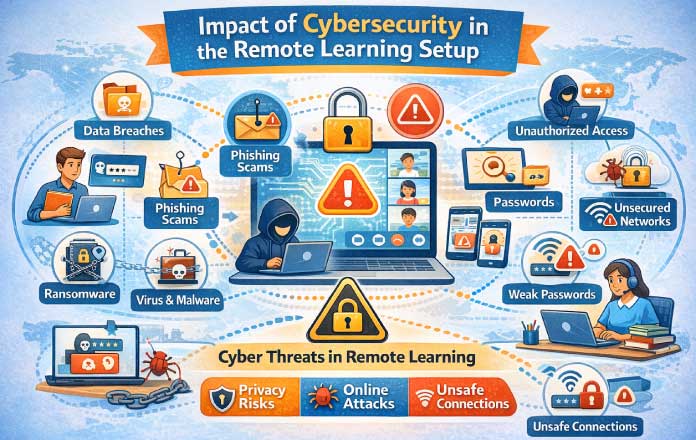
Impact of Cybersecurity in the Remote Learning Setup Educational institutions, plans, Remote Learning classrooms, and hybrid modes have become popular. In history, turning to schools and institutions has not been the same as others. Fortunately, it features a technology base that includes cloud video conferencing and collaboration that makes Remote Learning situations possible. For students and teachers, the last-minute decision to find the best things has brought new vulnerabilities. There are many consequences and disadvantages to cybersecurity in remote classrooms. In remote classroom settings, many cybersecurity issues arise. Let’s discuss cybersecurity in remote Learning. Remote Learning Concerns In remote Learning, safety is the main issue, with the plague of ransomware affecting the list. There is a risk of cyberattacks by many schools and institutions. Most teachers, students, and staff are not aware of their work environment’s external hazards. The risks of Remote Learning that approach to undermine trust and arise from infinite sources. Education’s latest disruptive showstoppers lock out the documents and spread infections among students. Also, there is no end-to-end management for students in many environments, so cybersecurity problems and quality deteriorate. In other cases, not every student can access the Internet safely, affecting the connection between classrooms. The Importance of Switching to Remote Learning There is a lot to learn in school systems and universities in terms of cybersecurity. Cybercriminals do not balance their situation and resources for IT security. This poses some cybersecurity risks in more Remote Learning as more professors engage students on social media. Lack of contingency steps due to the widespread impact of zoom outages. Some of the technologies that schools have embraced. The growth of Remote Learning was mainly built with a view of the industry. It resulted in a mismatch of versatility and scale with the needs of the classroom. Schools have a fiduciary responsibility to protect their student’s privacy, just as companies protect credit card information. At the school, the development of Remote Learning is important, but they can take time and too much awareness to know the needs of the audience serving in the classroom. Catastrophic cybersecurity vulnerabilities are alive and well in schools and businesses. With cybersecurity in Remote Learning setups, no one is safe. New feature suitability sets, and technologies are evolving as the challenge rises. Without checking it properly, schools need to be aware of the risks of introducing something. Schools need to consider this important moment and create awareness about it. School boards now need a cybersecurity policy and governance, as organizations and corporations should do.

SHARE

Educational institutions, plans, Remote Learning classrooms, and hybrid modes have become popular. In history, turning to schools and institutions has not been the same as others. Fortunately, it features a technology base that includes cloud video conferencing and collaboration that makes Remote Learning situations possible. For students and teachers, the last-minute decision to find the best things has brought new vulnerabilities. There are many consequences and disadvantages to cybersecurity in remote classrooms. In remote classroom settings, many cybersecurity issues arise.

Contents
Remote Learning ConcernsThe Importance of Switching to Remote Learning

Let’s discuss cybersecurity in remote Learning.

Remote Learning Concerns

In remote Learning, safety is the main issue, with the plague of ransomware affecting the list. There is a risk of cyberattacks by many schools and institutions. Most teachers, students, and staff are not aware of their work environment’s external hazards. The risks of Remote Learning that approach to undermine trust and arise from infinite sources. Education’s latest disruptive showstoppers lock out the documents and spread infections among students. Also, there is no end-to-end management for students in many environments, so cybersecurity problems and quality deteriorate. In other cases, not every student can access the Internet safely, affecting the connection between classrooms.

The Importance of Switching to Remote Learning

There is a lot to learn in school systems and universities in terms of cybersecurity. Cybercriminals do not balance their situation and resources for IT security. This poses some cybersecurity risks in more Remote Learning as more professors engage students on social media. Lack of contingency steps due to the widespread impact of zoom outages. Some of the technologies that schools have embraced. The growth of Remote Learning was mainly built with a view of the industry. It resulted in a mismatch of versatility and scale with the needs of the classroom. Schools have a fiduciary responsibility to protect their student’s privacy, just as companies protect credit card information. At the school, the development of Remote Learning is important, but they can take time and too much awareness to know the needs of the audience serving in the classroom.

Catastrophic cybersecurity vulnerabilities are alive and well in schools and businesses. With cybersecurity in Remote Learning setups, no one is safe. New feature suitability sets, and technologies are evolving as the challenge rises. Without checking it properly, schools need to be aware of the risks of introducing something. Schools need to consider this important moment and create awareness about it. School boards now need a cybersecurity policy and governance, as organizations and corporations should do.


You Might Also Like

The Growing Positive Impacts of AI on Financial Services

GDPR Law in a Global Economy

6 AI Marketing Trends that Are No Longer Useful in 2025

10 Indian AI Startups Shaping the Future of Technology

6 Reasons Generative AI Projects Fail and How to Make Yours Succeed

Planet Storyline January 11, 2026 October 28, 2020
Share This Article
Facebook Twitter Email Print
Share
Previous Article How is Employee Engagement Related to Organizational Effectiveness? How is Employee Engagement Related to Organizational Effectiveness?
Next Article AI in Employee Training Use of Artificial Intelligence in Employee Training and Development
Leave a comment

Leave a Reply Cancel reply

Your email address will not be published. Required fields are marked *

planetstoryline.complanetstoryline.com
Follow US
© 2026 Planet Storyline All Rights Reserved.
  • Disclaimer
  • Privacy
  • Advertisement
  • Contact us
  • About Us
Welcome Back!

Sign in to your account

Lost your password?